
Pot and Pan Cabinet Organization Ideas: Protect Surfaces and Clear the Handles
Organize pots and pans around cookware bodies, handle clearance and maker-specific surface protection before choosing a cabinet rack or nested arrangement.

By Emma & Ella FrostUpdated November 17, 2026

5-Ingredient Dump & Go Crockpot Meals
101 effortless slow cooker recipes for busy families.
View on AmazonAvailable on AmazonPot and pan cabinet organization starts with the cookware you need to take out, not with a matching rack. Give each everyday piece a place where its body, handles and cooking surface can remain protected. Keep a saucepan you use often accessible without making a rarely used stockpot the first thing you must lift.
Before buying an organizer, compare three possible arrangements: separate resting places, a maker-approved nested group, or a holder intended for the actual cookware. None is automatically best for every cabinet. The useful choice depends on the pieces, their care instructions and the cabinet's capacity.
Identify the cookware bodies before planning the shelf
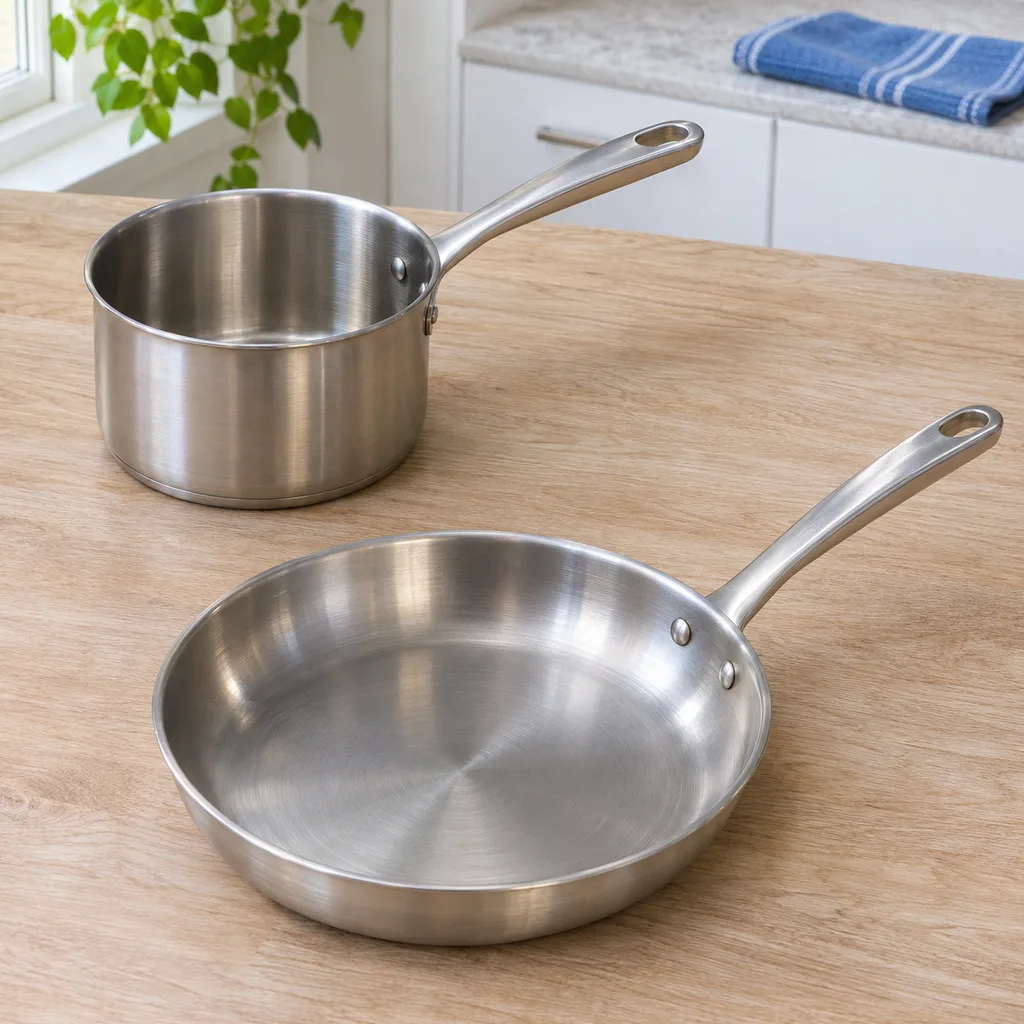
Make a short list of the pots and pans that actually belong here. Record the material or coating, the projecting handles, the matching lid and the meals for which you normally choose the piece. Keep uncertain model information available rather than assuming that similar-looking pans have identical storage requirements.
Separate cooking pots and frying pans from flat baking sheets, cutting boards and food containers. Their shapes create different problems. A skillet's long handle may determine its position even when its round body appears to fit neatly inside another pan.
Choose one everyday piece as the starting point. If a particular saucepan comes out repeatedly, its removal should not depend on dismantling an occasional-use collection. This is a household-use decision, not a reason to discard cookware simply because it is used less often.
Choose a resting place before choosing a stack
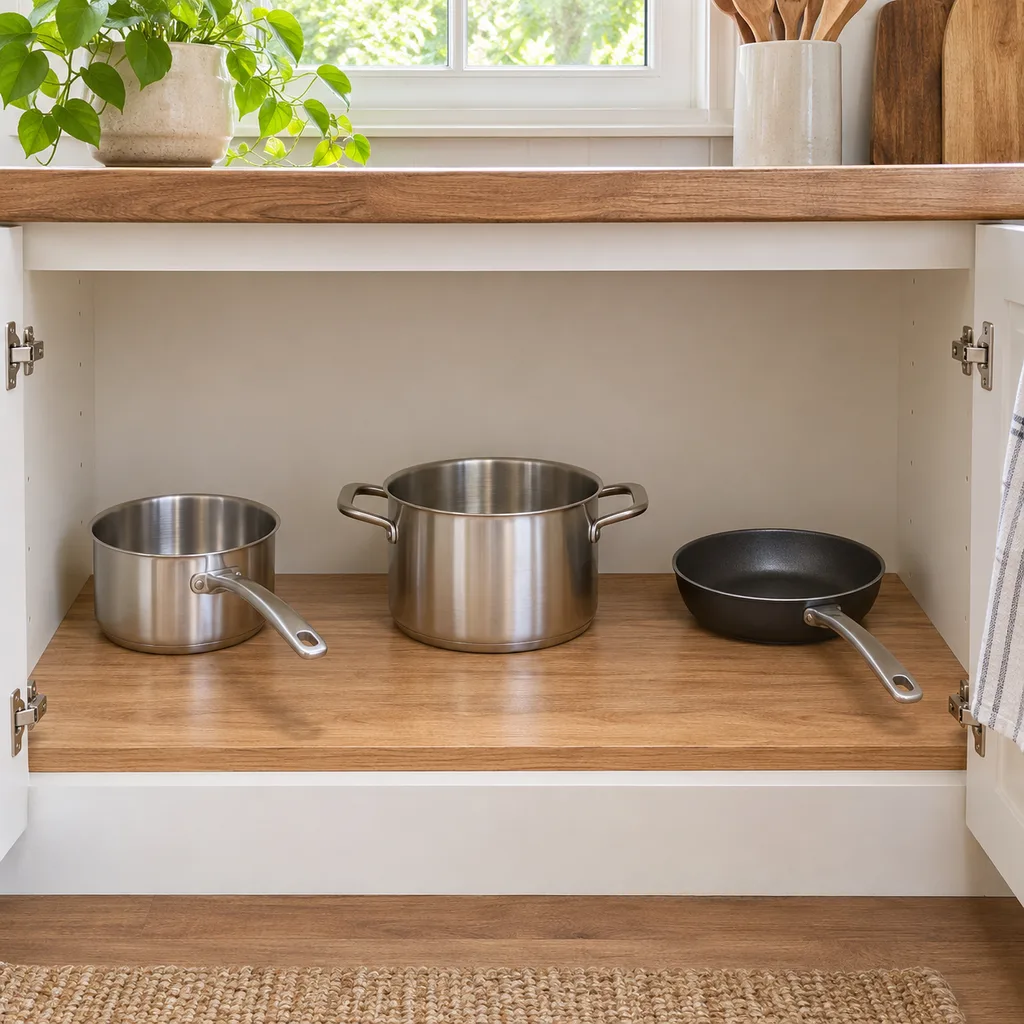
A separate place on a suitable shelf can be the simplest arrangement when the cookware fits and the shelf is intended for the load. It also makes the contact between pieces easier to see. Do not add a stack merely to create an empty-looking section of cabinet.
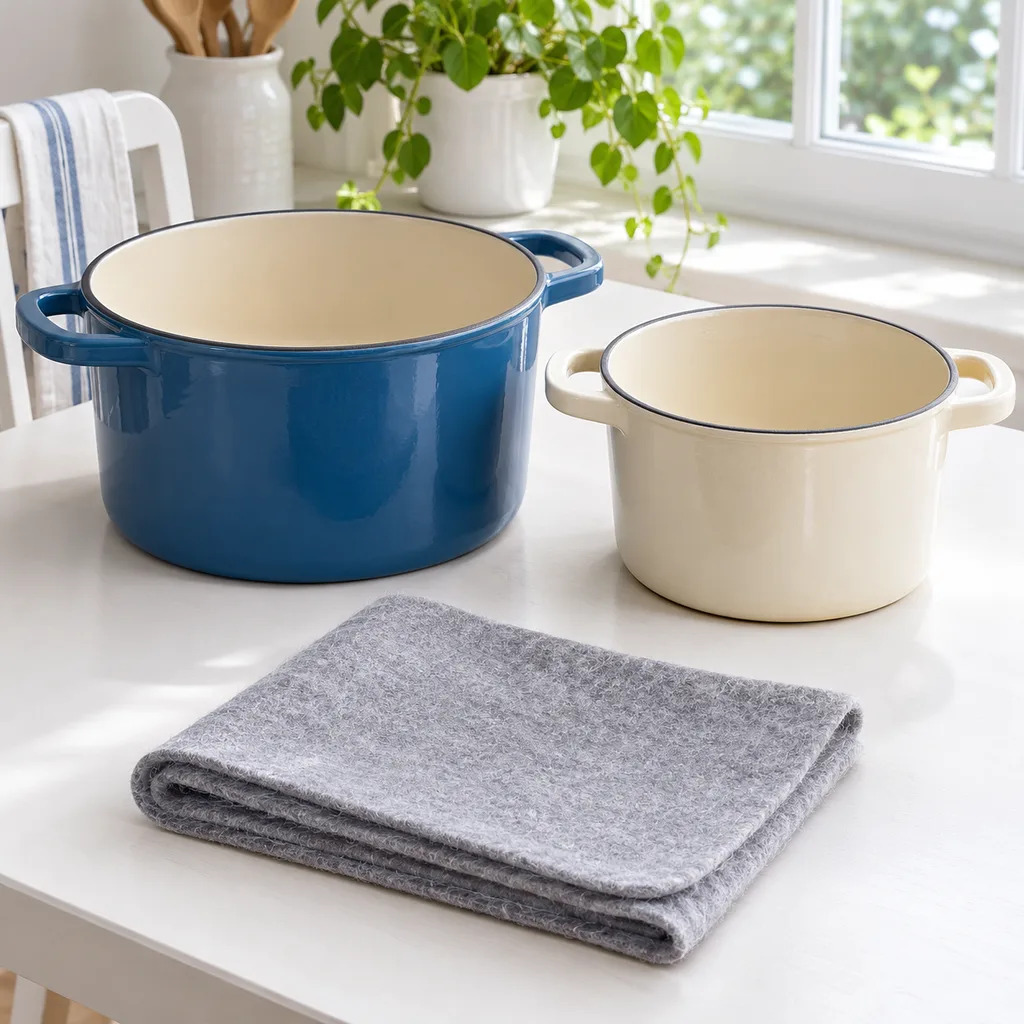
Where nesting is permitted by the actual cookware maker, consider both the surface underneath and the base of the piece above it. A pan that fits inside another is not necessarily a suitable unprotected neighbor. Keep nesting and stacking instructions specific to the cookware involved.
In its cookware-care guidance, Le Creuset describes felt protectors between nested or stacked cookware and advises avoiding knocks during storage. This is maker guidance for its products, not proof that any fabric, paper substitute or organizer is appropriate for every coating.
If the relevant instructions are missing, keep the pieces separate while you identify them. A generic organization photograph cannot establish compatibility or a safe stack height.
Include handles in the cabinet layout
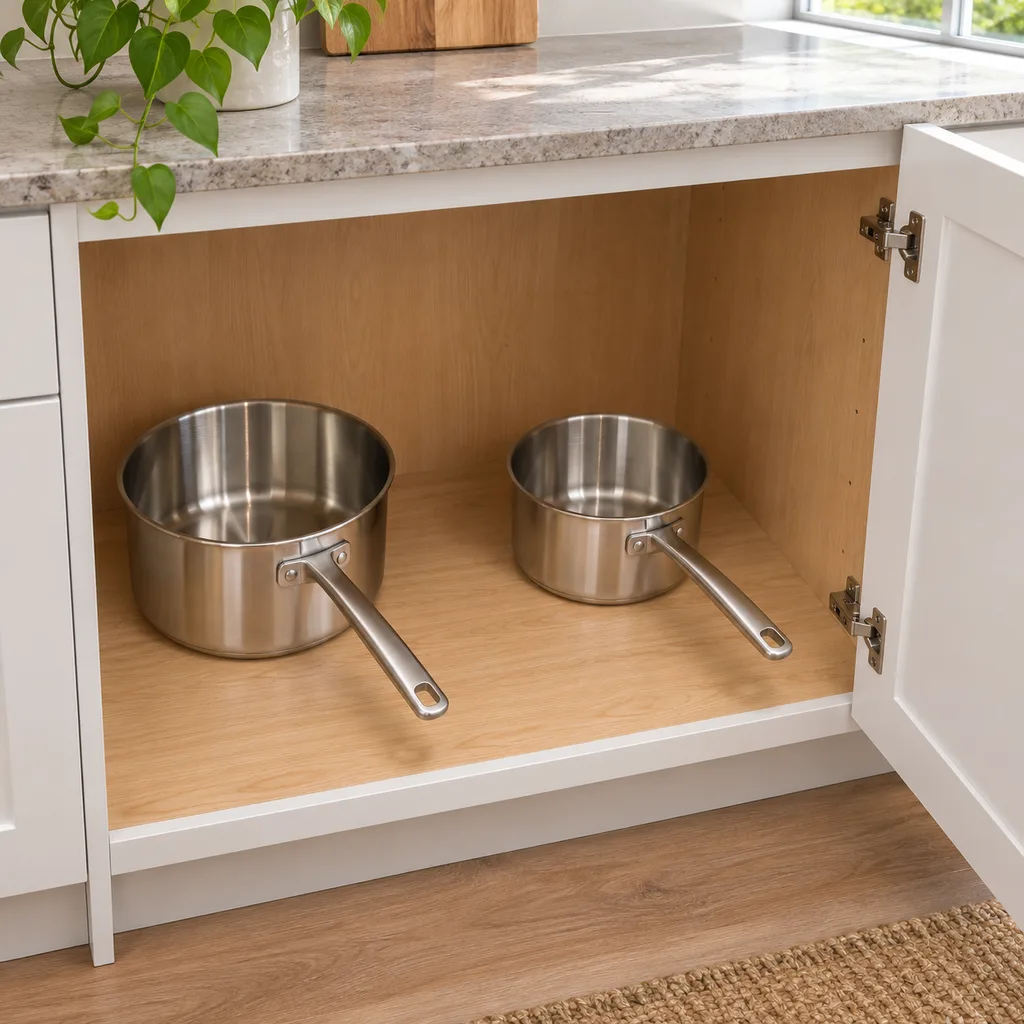
Compare the complete outline of each piece with its proposed location. Include long handles, side handles and any lid knob if the lid will remain with its pot. Check the door and neighboring pieces without forcing them into contact.
A pan may fit at the back but still be awkward to grasp. Moving it slightly can be more useful than adding a divider. Keep a clear route for the actual piece rather than arranging handles into an attractive pattern that makes one pan difficult to remove.
For the separate problem of reaching a deep shelf, use our deep kitchen cabinet organization guide. Here, focus on which cookware bodies touch, which handles cross and what must move to retrieve the chosen pan.
Evaluate a cookware holder against the real pieces
A freestanding holder needs to suit the cookware's intended orientation, dimensions and load. Check the holder's instructions and the cabinet's limits separately. A product photograph showing several pans is not a capacity statement for your collection.
Ask a concrete question before purchasing: which specific pan becomes easier to remove? If the answer is unclear, try a different arrangement with the equipment you already own. Do not substitute a desktop file sorter or decorative shelf for equipment intended to support cookware.
Pull-outs and mounted systems also need installation guidance for the actual cabinet. This guide does not supply drilling instructions, a universal fastener or a weight allowance. Resolve uncertainty with the relevant manufacturer before installation.
Give matching lids a deliberate destination
Keep the lid-to-pot relationship understandable whether the pieces stay together or live separately. A lid should not become an improvised shelf supporting another pot unless the actual equipment instructions permit that arrangement.
Separate lid storage can free a cookware body from an awkward stack, but it needs its own supported position. Our cutting board and pot lid storage guide addresses rims, projecting knobs and holders. It does not establish that a lid of a similar diameter is a compatible replacement.
Keep ready-to-store cookware separate from unfinished cleanup
Complete each piece's required cleaning and drying before returning it. Le Creuset's guidance calls for thoroughly drying its cookware and storing it away from steam and moisture. Follow your own maker's directions rather than treating a cabinet, liner or divider as a drying method.
Finally, look at the arrangement with the usual pieces present. Can the everyday pan leave its place without another pot being balanced on the counter? Can it return without scraping its neighbor or trapping a handle? Change the specific contact or obstruction that causes difficulty. An effective cookware cabinet is not the fullest one; it is one where the intended pieces have suitable, understandable places.
Keep good recipes close
Add The Cooking Twins to your preferred sources on Google for more easy dinners, no-bake desserts and kitchen inspiration.
Emma & Ella Frost
A practical resource from The Cooking Twins.
More from Emma & Ella Frost
Comments
Leave a commentShare your question or planning tip below.