
Small Kitchen Appliance Storage Ideas: Keep the Machine and Its Parts Connected
Plan small appliance storage around the machine, matching accessories, instructions and operating location without turning a storage cupboard into a powered workspace.

By Emma & Ella FrostUpdated November 17, 2026

5-Ingredient Dump & Go Crockpot Meals
101 effortless slow cooker recipes for busy families.
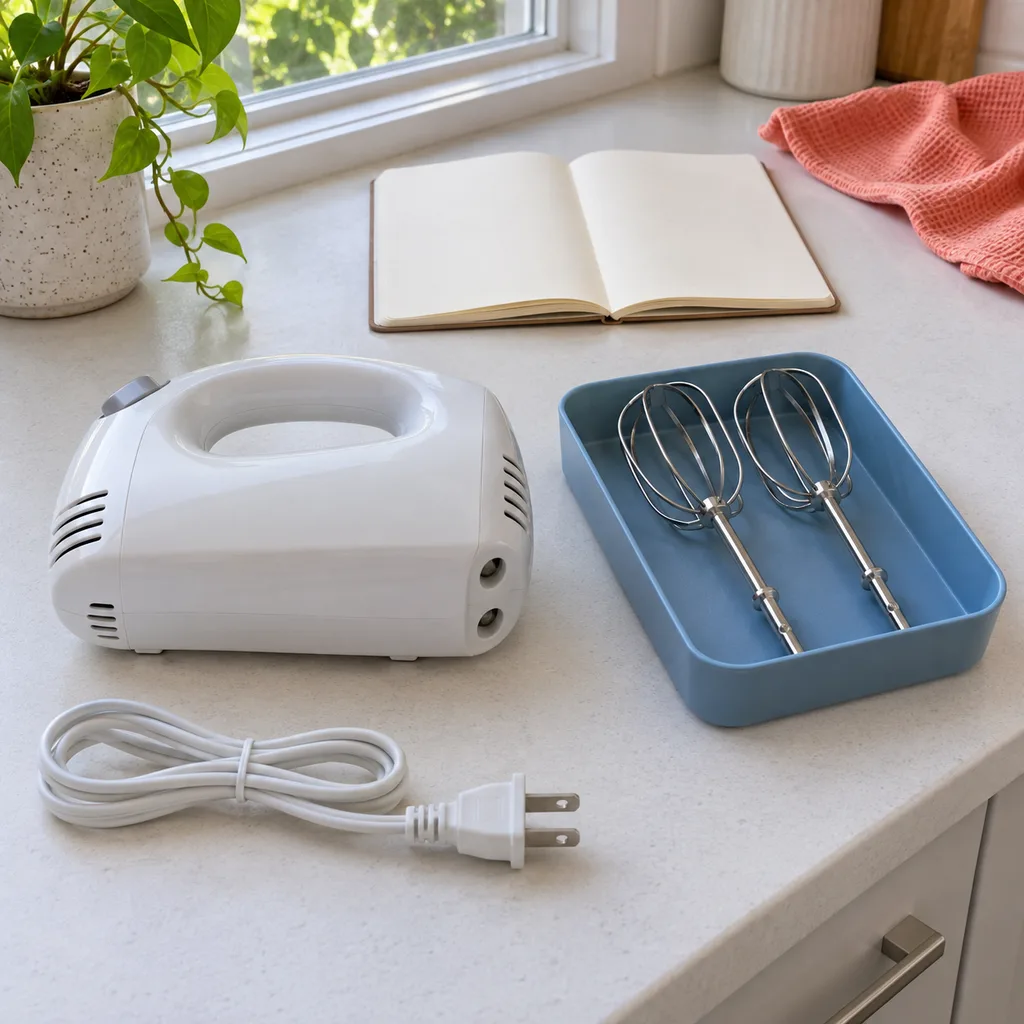
View on AmazonAvailable on AmazonSmall kitchen appliance storage becomes useful when you can find the machine, its matching accessories and the instructions needed to use it. Start with one appliance that regularly stays on the counter because putting it away is inconvenient. Give that appliance a complete home before buying another cabinet organizer.
Keep storage separate from operation. A cupboard can be a place to put away an appliance without being a place where it may run. This guide plans the machine-and-accessory collection; it does not authorize an enclosed appliance garage, electrical alteration or an unverified shelf load.
Make a record for one appliance, not the whole cupboard
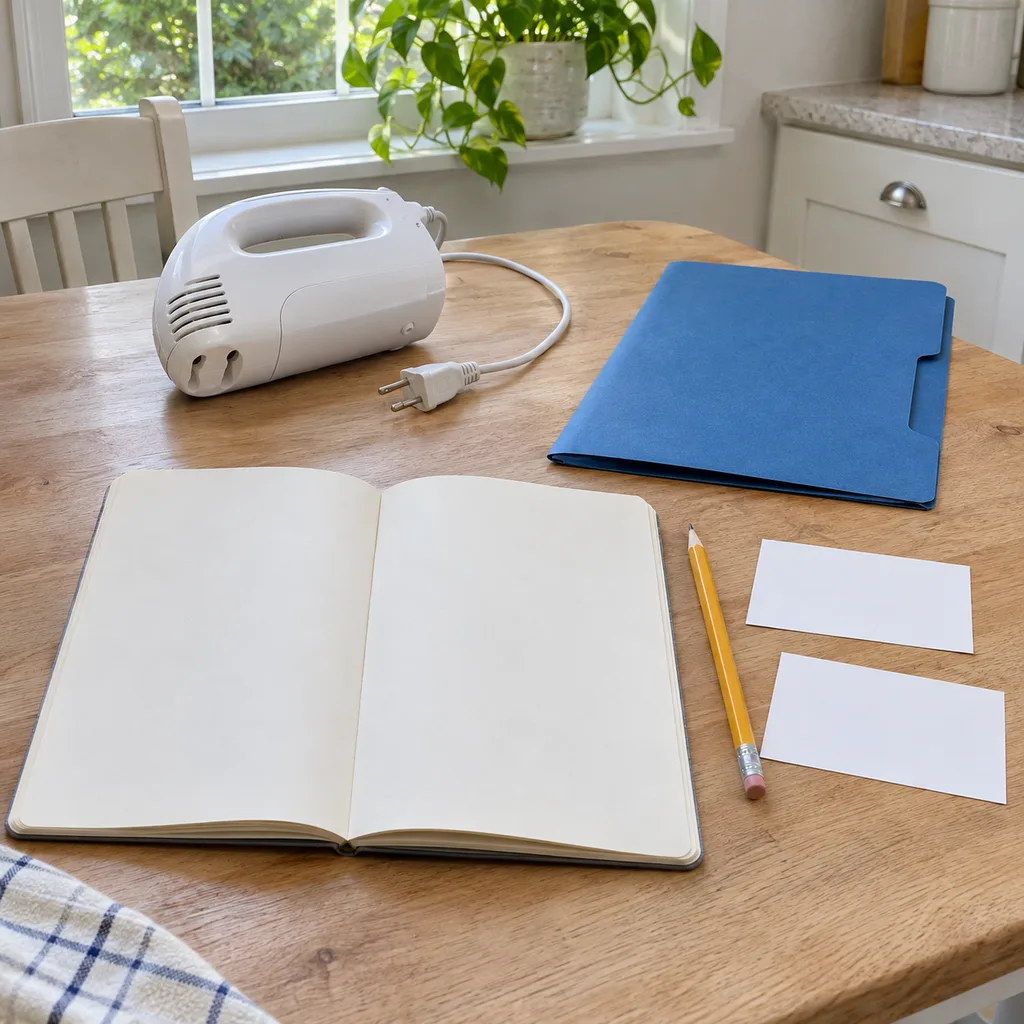
Identify the actual model and keep its instructions accessible. List the main unit, the accessories you own and any components whose identity is uncertain. A bowl that looks like the original or a similar charging lead is not automatically a compatible replacement.
Make a short storage record with four entries: the machine's home, the matching accessories' home, the instructions' location and the intended operating location. These can be different places. A large motor base and a small removable accessory do not necessarily need the same container.
For a hand mixer, the record might identify its main unit, its own mixing attachments and the relevant manual. For a blender, it might identify the base and the exact compatible vessel. Those are inventory examples, not permission to remove, disassemble or reconnect parts differently from the model's instructions.
Give the main unit a suitable resting place
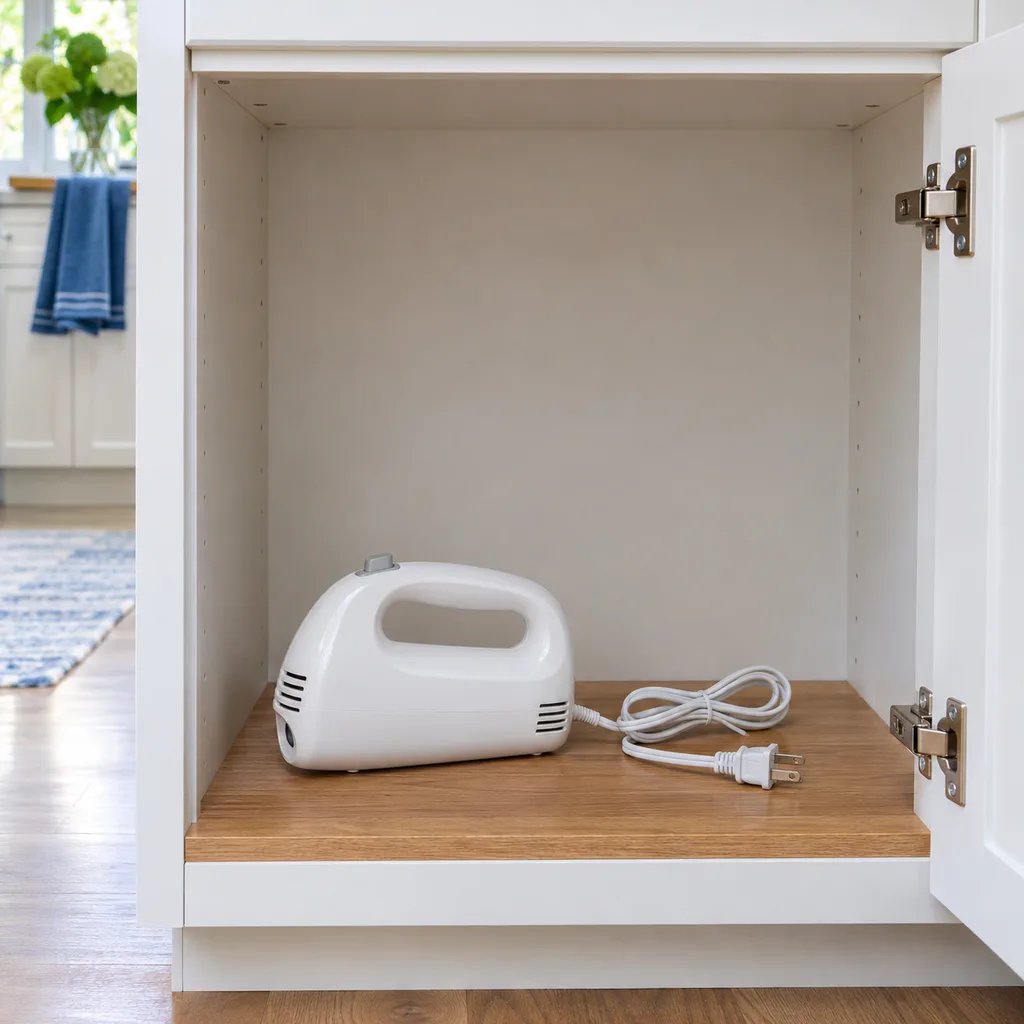
Choose a location appropriate for the actual appliance, its required orientation and the furniture supporting it. Check the appliance and cabinet instructions, the opening and the movement needed to retrieve it. A quoted shelf width does not answer whether you can lift the machine comfortably.
A heavy appliance needs more thought than a small accessory box. Do not solve a crowded counter by moving a machine to an awkward overhead position. If its appropriate location is uncertain, resolve that before filling the cupboard around it.
Our deep cabinet organization guide covers the separate front-to-back access problem. Here, the important question is whether the appliance itself has a suitable home, not whether every empty part of the shelf has been filled.
Keep small accessories identifiable without making a heavy kit
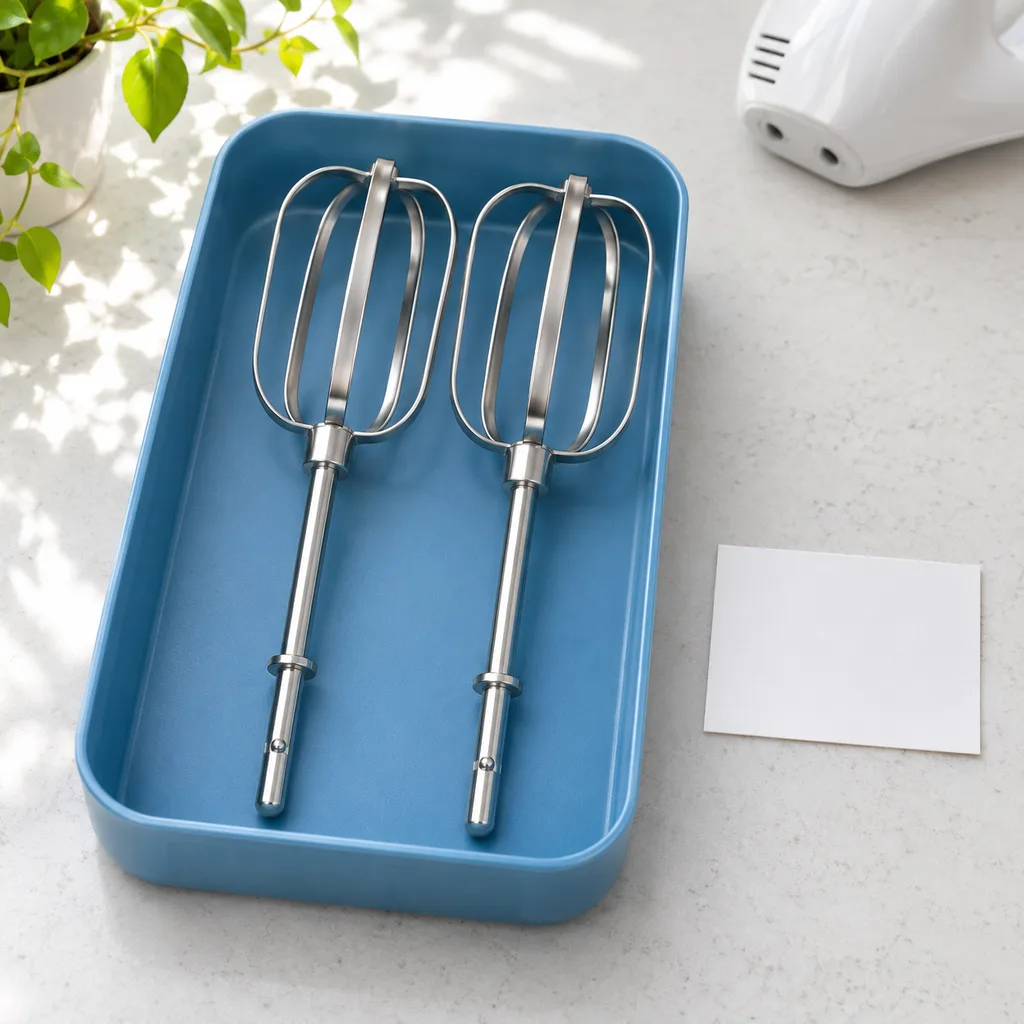
Use an appropriate separate compartment or container for the small accessories that belong together. Name the group for the actual appliance rather than kitchen extras. Keep the original identifiers or instructions needed to distinguish similar-looking parts.
A modest accessory group can be easier to manage than one large bin containing the appliance and every attachment. The outer organizer needs to suit its contents and intended load. A handle on a decorative basket does not establish that it can carry a motor unit.
Sharp components need storage according to their own product guidance. Do not leave them loose in a shared accessories box or improvise a protective cover from this article. If the original protective or storage parts are missing, ask the manufacturer about the appropriate arrangement.
Choose between together, nearby and separately recorded
Three simple arrangements can help you think through the collection. Keep the machine and compatible accessories together when the actual storage instructions and location permit it. Keep accessories nearby when a small separate compartment makes them easier to identify. Use a written location reference when the pieces genuinely need different storage areas.
For example, an accessory compartment can say which model it belongs to while the machine's record names that compartment. This avoids placing a heavy unit inside a small-parts tray merely to make the set appear complete.
Do not turn the reference into an enormous household catalog. A clear note for the appliance that repeatedly causes difficulty is enough to test the idea. Add another only when its missing parts or confusing location create a real problem.
Keep cords and operating decisions out of decorative shortcuts
The U.S. Fire Administration's appliance guidance advises unplugging small appliances when they are not in use and avoiding cord locations where they can be damaged or pinched. A cupboard door should not become a way to hide a connected lead.
Follow the actual appliance's shutdown, cooling, cleaning and cord-storage instructions before putting it away. This guide supplies no universal cooling interval or cord-wrapping method. It also does not establish that a tray, shelf, cabinet interior or extension lead is an acceptable operating arrangement.
If equipment or its cord is damaged, stop the organization project and follow the applicable safety and manufacturer guidance. A new box does not resolve damage, missing instructions or uncertain electrical compatibility.
Check whether the collection returns after use
After completing the appliance's required care routine, return the machine and its accessories to their named places. Notice whether the small pieces have an obvious destination or are simply being left beside the machine again.
If the main unit returns but its accessories do not, improve the accessory location instead of enlarging the machine's bin. If the instructions are hard to find, update the reference. Keep the equipment's identity and requirements in control.
For the surrounding work surface, our countertop organization guide helps decide what belongs out between meals. A useful appliance storage system completes that decision: the machine has a suitable resting place, its own parts stay identifiable and the next use does not begin with a search.
Keep good recipes close
Add The Cooking Twins to your preferred sources on Google for more easy dinners, no-bake desserts and kitchen inspiration.
Emma & Ella Frost
A practical resource from The Cooking Twins.
More from Emma & Ella Frost
Comments
Leave a commentShare your question or planning tip below.