
Fresh Herb Storage Organization: Start With Parsley and Cilantro
Keep parsley and cilantro identifiable, connect each bunch with a meal and follow a supported refrigerated water method with a clear daily maintenance routine.

By Emma & Ella FrostUpdated November 17, 2026

5-Ingredient Dump & Go Crockpot Meals
101 effortless slow cooker recipes for busy families.
View on AmazonAvailable on AmazonFresh herb storage organization works best when the name of the herb, its storage method and the meal you bought it for stay connected. Start with parsley and cilantro rather than moving every green bunch into identical jars. A clear container is useful only if it helps you follow the right instructions and find the bunch again.
This guide uses parsley and cilantro as a manageable starting group. It is not a universal method for basil, living potted herbs, dried seasonings or herbs preserved in oil. Keep package instructions available and check herb-specific guidance before extending an arrangement to another plant.
Keep parsley and cilantro identifiable
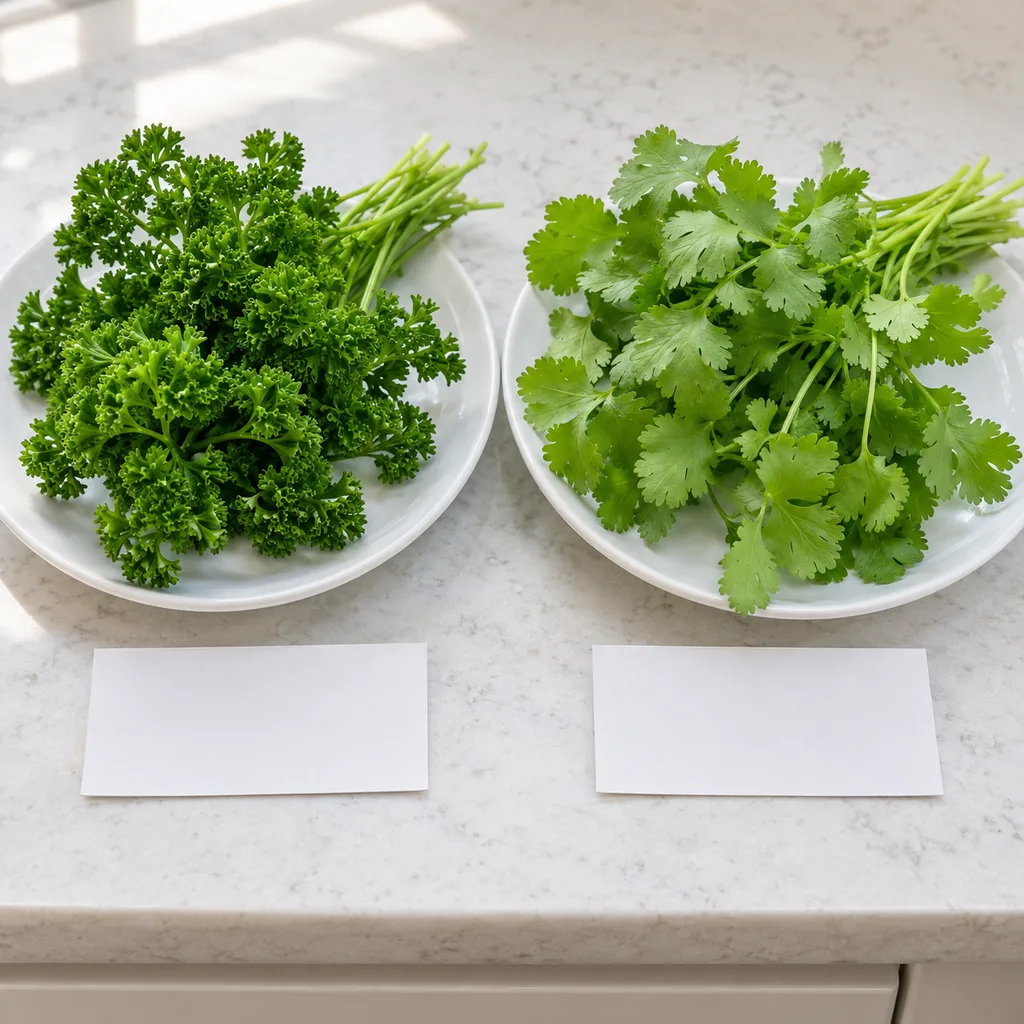
Sort the actual purchases before changing their packaging. Keep the store label or another accurate identifier with each bunch. If you cannot confidently identify the herb, resolve that question rather than giving it a name because the leaves resemble a photograph.
The Texas A&M parsley and cilantro guide recommends choosing crisp green leaves and avoiding discolored or decayed ones. It also places these herbs in the refrigerator after harvest. Its harvest-based advice is not a new countdown starting when you bring an unknown-age grocery bunch home.
Keep separate purchases recognizable even when they are the same herb. Topping up an older jar with a new bunch makes the two purchases harder to distinguish. A simple label or separate place can be more useful than one large mixed display.
Choose a supported method rather than combining several hacks
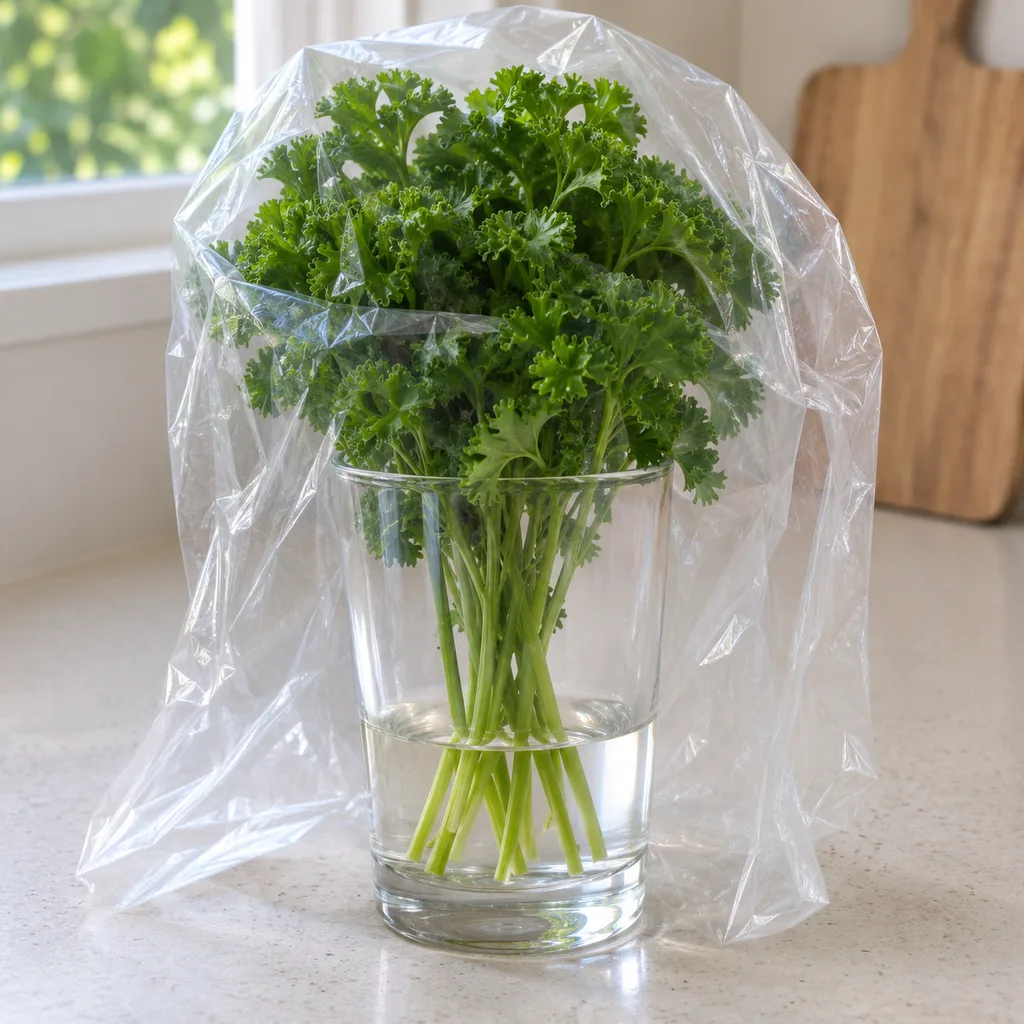
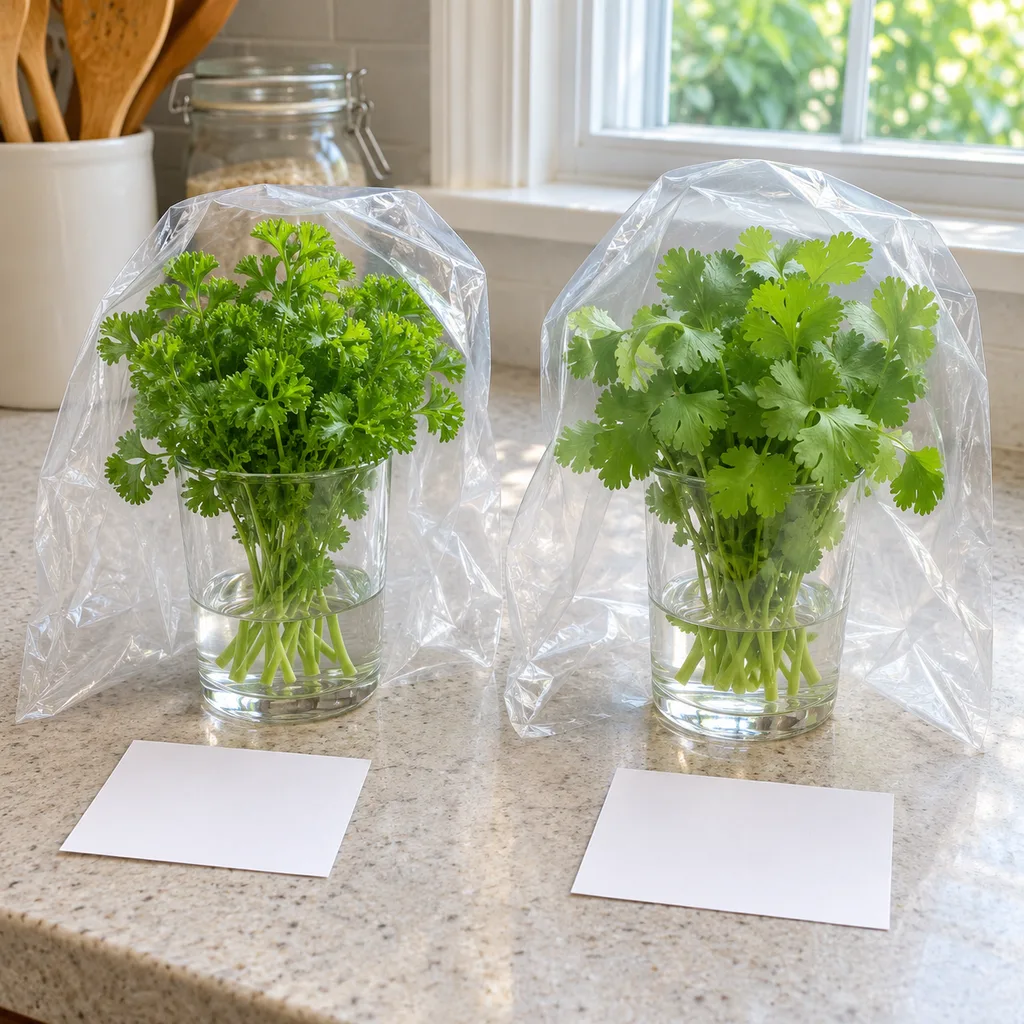
Iowa State Extension's fresh-herb guidance describes trimming stems, standing them in a glass with one inch of water, covering loosely with a plastic bag for air circulation and refrigerating. It calls for changing the water daily. Use that complete approach for your parsley or cilantro instead of borrowing one attractive detail and inventing the rest.
Choose a clean container suitable for food use that supports the actual bunch. Avoid forcing a large bunch into a small opening. If the arrangement is awkward to lift or maintain, use a smaller group rather than making the refrigerator accommodate a decorative tower.
Package-specific directions remain important. A purchased ready-to-use herb product may arrive with its own storage and handling instructions. Do not discard those directions merely to make it resemble a loose bunch stored in a jar.
Give each bunch a place that you can maintain
Choose an appropriate refrigerator location where the container remains supported and can be removed without knocking another item. Check the actual refrigerator instructions, shelf limits and available height. A narrow gap beside taller food is not necessarily a useful place for a glass of herbs.
Keep identifying information visible from the opening. A label on the outside of the container can name the herb and note the purchase or setup date, provided it does not replace the original information. That date is a record of an action, not a guarantee that the contents remain suitable.
Our produce drawer organization guide covers the broader appliance and grouping decisions. The herb arrangement adds a particular maintenance task: reaching the container and following the chosen method, including its water changes.
Make the maintenance reminder specific
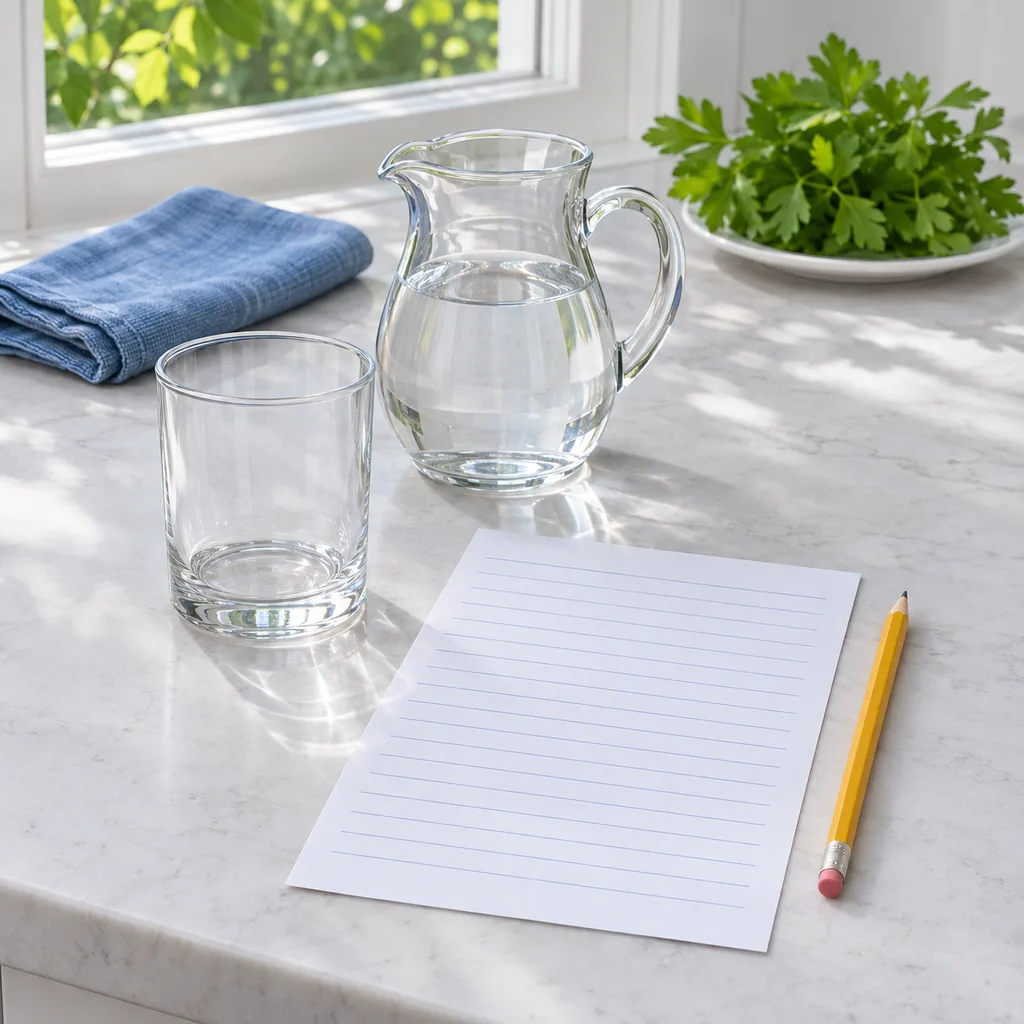
A note reading check herbs is easy to ignore because it does not say what needs doing. For the water method above, a useful reminder is change water and check the bunch. Keep that task separate from a general refrigerator reset.
Assign the routine to the person who will actually do it, especially in a shared kitchen. A jar that everybody assumes somebody else is maintaining is not an improvement over the original package.
Do not use the calendar alone to judge the herbs. Appearance, handling history and relevant food guidance still matter. This organization system supplies no guaranteed storage life or way to restore decayed herbs.
Connect the bunch with an actual meal
Write down which planned recipe calls for parsley or cilantro and check the amount that recipe actually needs. Keep those two herb names separate on the shopping list rather than using a broad entry such as greens.
If another planned meal uses the same herb, consider the actual recipe and timing before buying an additional bunch. This does not make parsley and cilantro interchangeable or authorize a fresh-to-dried substitution. Follow the recipe you intend to cook.
Use the store-aisle grocery list guide to move confirmed purchases onto the shopping list. An unfinished storage task and a real shortage are different things; another bunch does not solve the first problem.
Keep washing and preservation decisions separate
Iowa State advises washing herbs under cool running water and shaking off excess moisture before use. Keep that preparation step distinct from simply putting an identifying label on a storage container.
If the bunch will not suit your intended meals, use a reliable herb-specific preservation guide rather than improvising an oil mixture or treating refrigeration as indefinite storage. This article does not provide a drying, freezing or infused-oil procedure.
Begin with two clearly named bunches, one supported storage method and a maintenance task someone will carry out. Expand the system only after checking the requirements of the next herb, not because another matching jar fits.
Keep good recipes close
Add The Cooking Twins to your preferred sources on Google for more easy dinners, no-bake desserts and kitchen inspiration.
Emma & Ella Frost
A practical resource from The Cooking Twins.
More from Emma & Ella Frost
Comments
Leave a commentShare your question or planning tip below.